Who Are the Darklords?
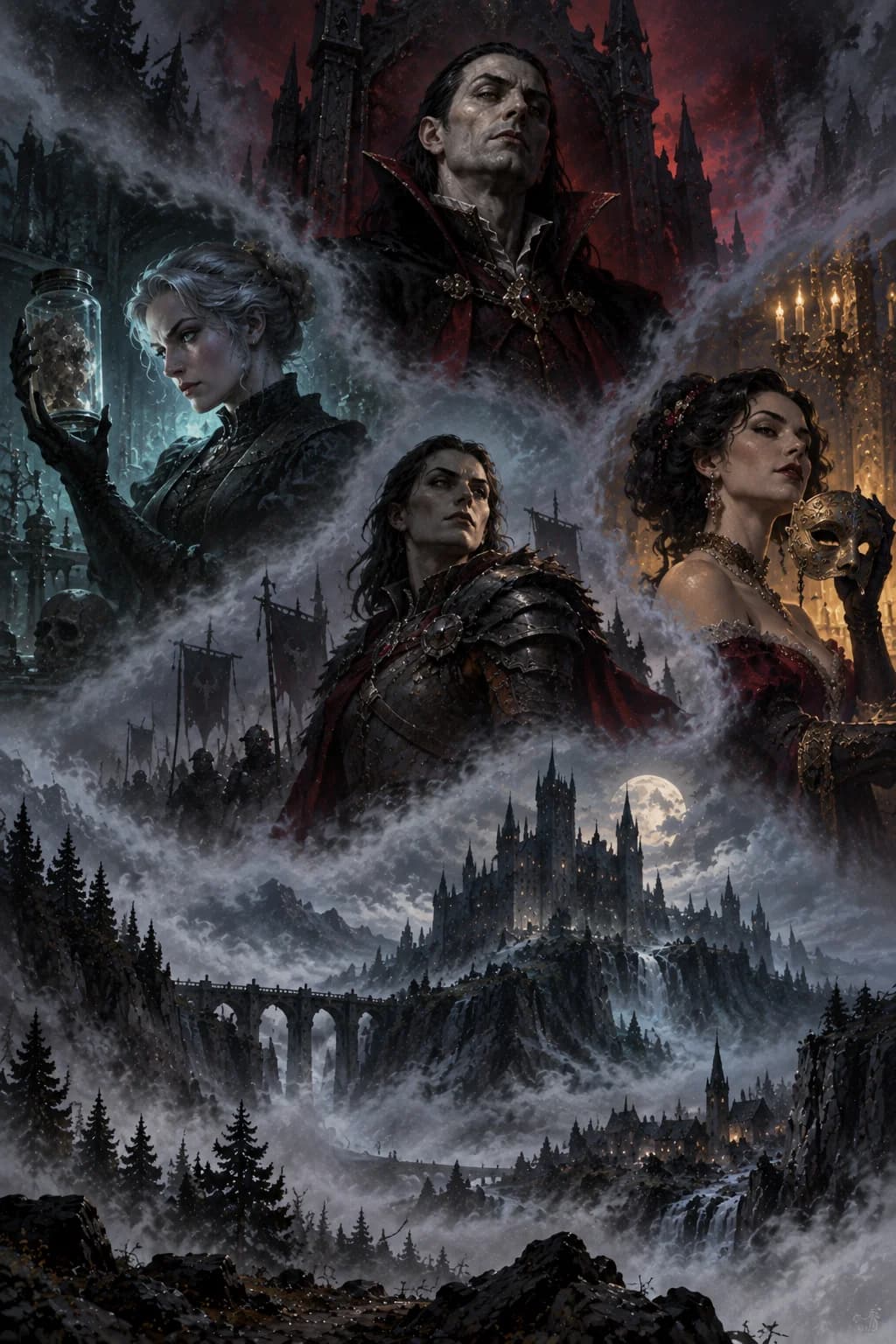
Meet the cursed villains at the heart of Ravenloft, powerful rulers trapped within nightmare realms shaped by their own crimes, desires, and torment.
 G.R. Vinces5 min read
Welcome to Ravenloft · Reading 4 of 8
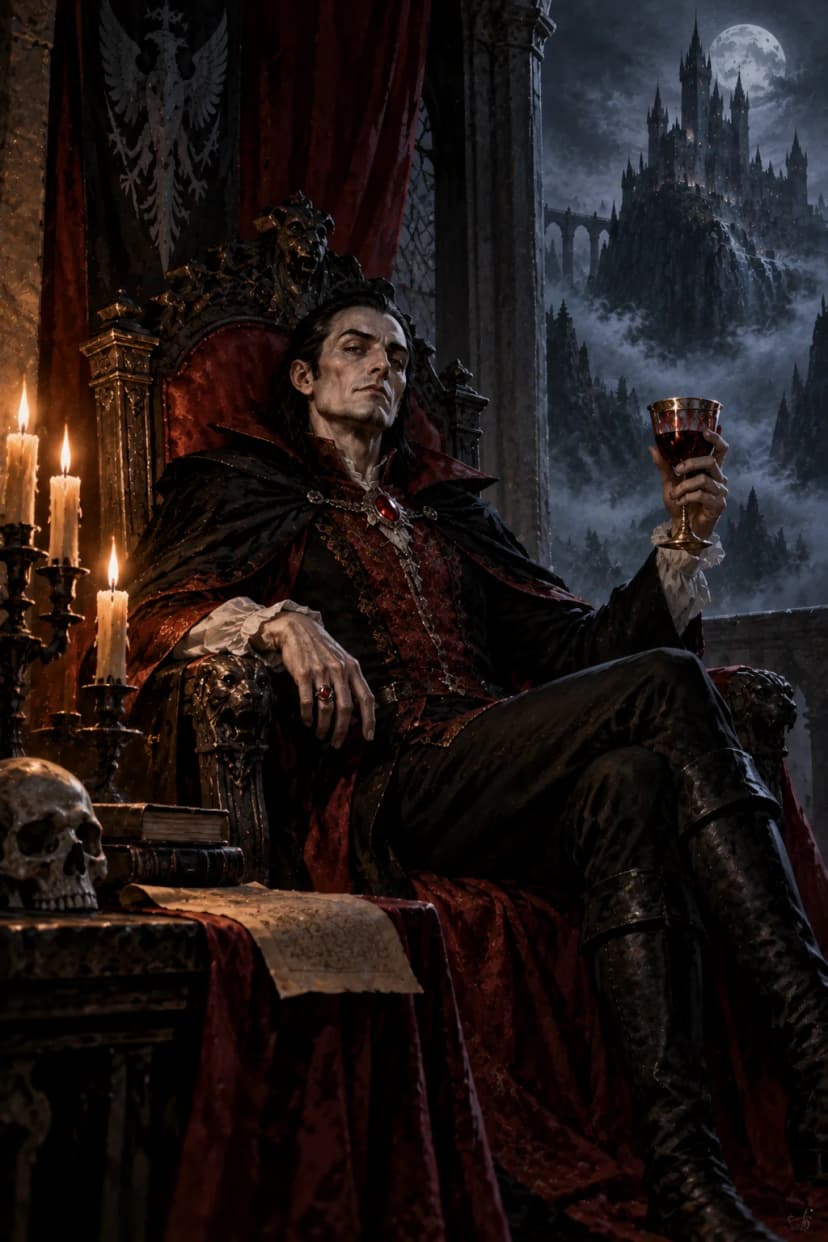
A vampire rules from a castle above a dying valley.
A brilliant scientist pursues the secret of life while everything she creates reminds her of what she cannot achieve.
A ruthless commander prepares her nation for another siege, knowing the dead will return.
Across Ravenloft, the nightmares are different.
But again and again, there is someone at their center.
A ruler.
A monster.
A prisoner.
They are called Darklords.
And although they may appear to possess extraordinary power, there is one thing every Darklord eventually discovers:
The prison belongs to them, too.
The Prisoner at the Center
Most Domains of Dread are bound to a Darklord—an individual whose evil deeds have resulted in supernatural imprisonment within Ravenloft.1
Darklords can be tyrants, murderers, monsters, aristocrats, scientists, undead creatures, or something stranger.
They don’t need to resemble one another.
What connects them is their relationship with their domain.
Each Darklord has committed terrible acts and refuses, in some fundamental way, to accept responsibility for them.2
They blame others.
They justify themselves.
They repeat the same mistakes.
And their domain becomes the stage upon which that failure continues.
The Dark Powers
Behind the Darklords are forces even more mysterious.
The Dark Powers.
Official Ravenloft lore intentionally avoids defining exactly what the Dark Powers are.3
Gods?
Ancient entities?
Something born from the Shadowfell?
Something else entirely?
Nobody knows for certain.
What matters is what they do.
The Dark Powers create or shape the Domains of Dread and imprison Darklords within them, constructing punishments that seem almost perfectly designed for their victims.3
But these punishments aren’t simple torture chambers.
They are far more personal.
Give Them Everything—Except What They Want
A Darklord might possess a castle.
An army.
Immortality.
Political power.
Terrifying supernatural abilities.
Perhaps even an entire country.
And still be miserable.
Because the domain continually places the Darklord’s deepest desire just beyond reach.2
Strahd von Zarovich, for example, rules Barovia and possesses extraordinary vampiric power.
Yet his story is defined by obsession.
Strahd murdered his brother Sergei and pursued Sergei’s beloved, Tatyana. His crimes ultimately became inseparable from the curse that transformed him and trapped him within Barovia.4
Again and again, Strahd encounters echoes of what he desires.
Again and again, he fails to possess it.
His kingdom is his throne.
And his cage.
Every Darklord Has a Different Hell
Strahd is only the most famous example.
In Lamordia, Dr. Viktra Mordenheim is a brilliant scientist whose experiments push against the boundary between life and death. Her domain continually reflects her obsession with scientific mastery and her fixation on the being known as Elise.5
In Falkovnia, Vladeska Drakov is a ruthless military leader trapped in a land periodically overwhelmed by enormous undead invasions.6
Her answer is always more discipline.
More fortifications.
More sacrifice.
More control.
And still the dead return.
In Dementlieu, Saidra d’Honaire presides over an elegant society obsessed with status, appearances, and deception—even as her own existence is built upon those same things.7
Different villain.
Different desire.
Different punishment.
The pattern remains.
Why Don’t They Just Leave?
Because they can’t.
Darklords are bound to their domains.8
They may control the borders and prevent others from escaping, but that authority doesn’t grant them freedom.
A Darklord might dominate almost everyone around them while remaining unable to cross the boundary of their own prison.
That contradiction is fundamental to Ravenloft.
The jailer is also an inmate.
And sometimes the Darklord doesn’t even fully understand the nature of their imprisonment.
Can a Darklord Be Redeemed?
Perhaps.
But Ravenloft isn’t particularly optimistic about it.
The tragedy of many Darklords is not simply that they once did something terrible.
It’s that they continue making the choices that brought them here.
They rationalize.
They obsess.
They blame.
They hurt others.
They refuse to change.
Their punishment continues because, given another opportunity, they often choose the same path again.
The door to the cage may therefore be more complicated than defeating a monster.
A Darklord might need to become someone fundamentally different.
And that may be the one thing they are least capable of doing.
The Monster in the Mirror
That’s what makes a Darklord different from an ordinary villain.
Defeating a Darklord can save lives.
Escaping their domain can be a victory.
But Ravenloft asks another question:
Why did this person become a monster?
Not to excuse them.
To understand the horror.
Behind every Darklord lies a story about obsession, cruelty, pride, fear, jealousy, ambition, or the refusal to accept responsibility.
The supernatural prison simply makes that truth impossible to escape.
And nowhere is that idea more famous than in a valley surrounded by mountains and mist.
A place where villages live beneath the shadow of an ancient castle.
A place whose ruler has been repeating his tragedy for centuries.
A place called Barovia.
Sources & Further Reading
- ↩
Wizards of the Coast, Van Richten’s Guide to Ravenloft (2021), chap. 2, “Creating Domains of Dread.” Darklords occupy the central role in most Domains of Dread and are themselves imprisoned within Ravenloft.
- ↩a↩b
Ibid., “Darklords.” The 2021 treatment emphasizes a Darklord’s evil, their refusal to accept responsibility, and a torment connected to their desires and failures.
- ↩a↩b
Ibid., “The Dark Powers.” The nature and motives of the Dark Powers are intentionally left mysterious rather than canonically reduced to a single definitive explanation.
- ↩
Wizards of the Coast, Curse of Strahd (2016), “The Vampire’s History” and Barovia material; Van Richten’s Guide to Ravenloft, “Barovia.” Strahd’s murder of Sergei, obsession with Tatyana, transformation, and imprisonment are central to his history.
- ↩
Van Richten’s Guide to Ravenloft, “Lamordia,” for Viktra Mordenheim, Elise, and the domain’s themes of scientific obsession and body horror.
- ↩
Ibid., “Falkovnia,” for Vladeska Drakov and the recurring undead invasions that define her domain and torment.
- ↩
Ibid., “Dementlieu,” for Saidra d’Honaire and the domain’s fixation on deception, status, and false appearances.
- ↩
Ibid., chap. 2–3. Darklords are prisoners of their domains despite the supernatural authority they can exercise within them.
Bibliography
- Wizards of the Coast. Van Richten’s Guide to Ravenloft. Renton, WA: Wizards of the Coast, 2021. Especially chap. 2, “Creating Domains of Dread,” and chap. 3, “Domains of Ravenloft.”
- Van Richten's Guide to Ravenloft — D&D Beyond
- Wizards of the Coast. Curse of Strahd. Renton, WA: Wizards of the Coast, 2016. Especially the introductory history of Strahd and the presentation of Barovia.
- Curse of Strahd — D&D Beyond